In the animated story Toy Story, we see Woody and his gang of friends getting up to all sorts of fun, while supporting one another when toy life gets hard. As human beings, friendships also add something special to our lives. From our earliest years, other children become an increasingly important part of a child’s social world. But, just like other areas of development, the way children interact with one another changes as they grow.
So, what does friendship actually look like in middle childhood – the period spanning more or less the age of 6 to 12 years? Let’s take a look at some of the things we might typically see.
I spy with my little eye…
During this stage of development, children increasingly gain greater independence from the adults in their lives. Starting formal education, developing their own interests and becoming involved in activities such as sport all provide opportunities for children to spend more time with peers and develop greater independence.
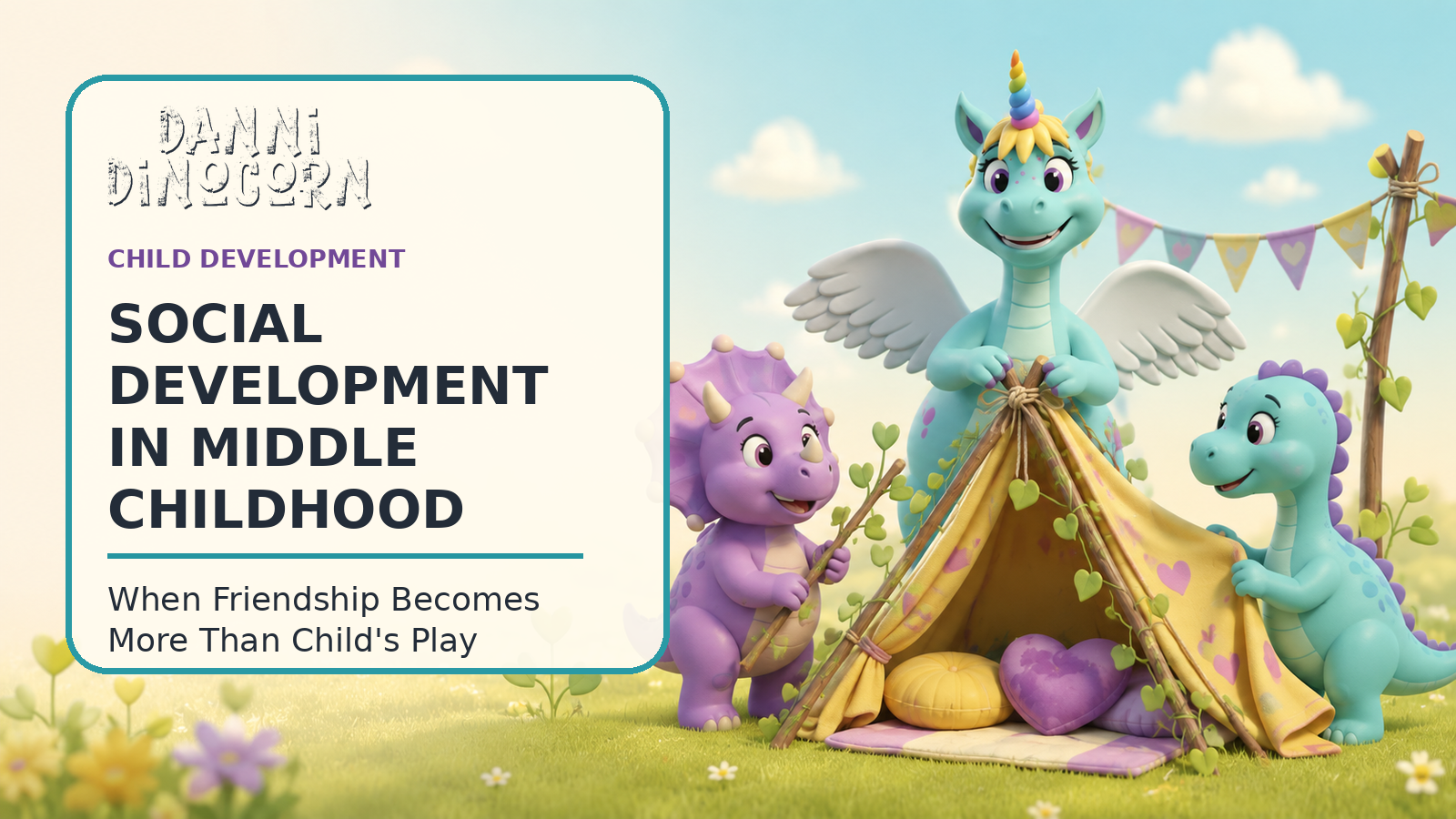
Alongside this growing independence, children increasingly become interested in spending time and playing with other children. We may also see a shift towards increasingly interactive, cooperative play. Add a sprinkle of imagination, and children may create made-up games, pretend scenarios and shared stories together.
At this stage, children may also show increasingly clear preferences for particular friends or friendship groups – their “besties”. As this happens, children begin to develop an increasingly sophisticated understanding of friendship and what it means to have a friend.
Rule-governed play also becomes increasingly important. Children in this age group can be quite insistent on following the “right” rules to a game. They may also begin to negotiate, enforce or even create rules together. Through these games, children have opportunities to practise things like sharing, taking turns, negotiating and working together towards a common goal.
Increasingly, these social interactions also give children opportunities to move beyond their own immediate perspective and become more aware of the people around them – recognising that others have feelings, needs, thoughts and perspectives of their own. As this develops, we may see children showing increasingly prosocial behaviours, such as helping, comforting, including and showing affection towards others.
So, maybe social play isn’t really just child’s play. Perhaps it is also part of the important developmental “work” of childhood.
Always a walk in the park?
Learning to navigate this increasingly complex social world is not always easy. Importantly, children are still learning and developing the abilities needed to navigate and sustain these social relationships.
And children don’t all develop or experience friendships in exactly the same way. Some children seem to navigate social situations with ease, while others may find certain aspects of friendship more challenging.
Join us in our new series of blogs about children’s social development as we explore some of these ideas and take a closer look at friendship and social interaction.
References
- Hay, D. F., Payne, A., & Chadwick, A. (2004). Peer relations in childhood. Journal of Child Psychology and Psychiatry, 45(1), 84–108. https://doi.org/10.1046/j.0021-9630.2003.00308.x
- Lasseter, J. (Director). (1995). Toy Story [Film]. Pixar Animation Studios; Walt Disney Pictures.
- Louw, D. A., Van Ede, D. M., & Ferns, I. (1998). Middle childhood. In D. A. Louw, D. M. Van Ede, & A. E. Louw (Eds.), Human development (3rd ed., pp. 325–383). Kagiso.
- National Research Council. (1984). Development during middle childhood: The years from six to twelve. National Academy Press. https://doi.org/10.17226/56