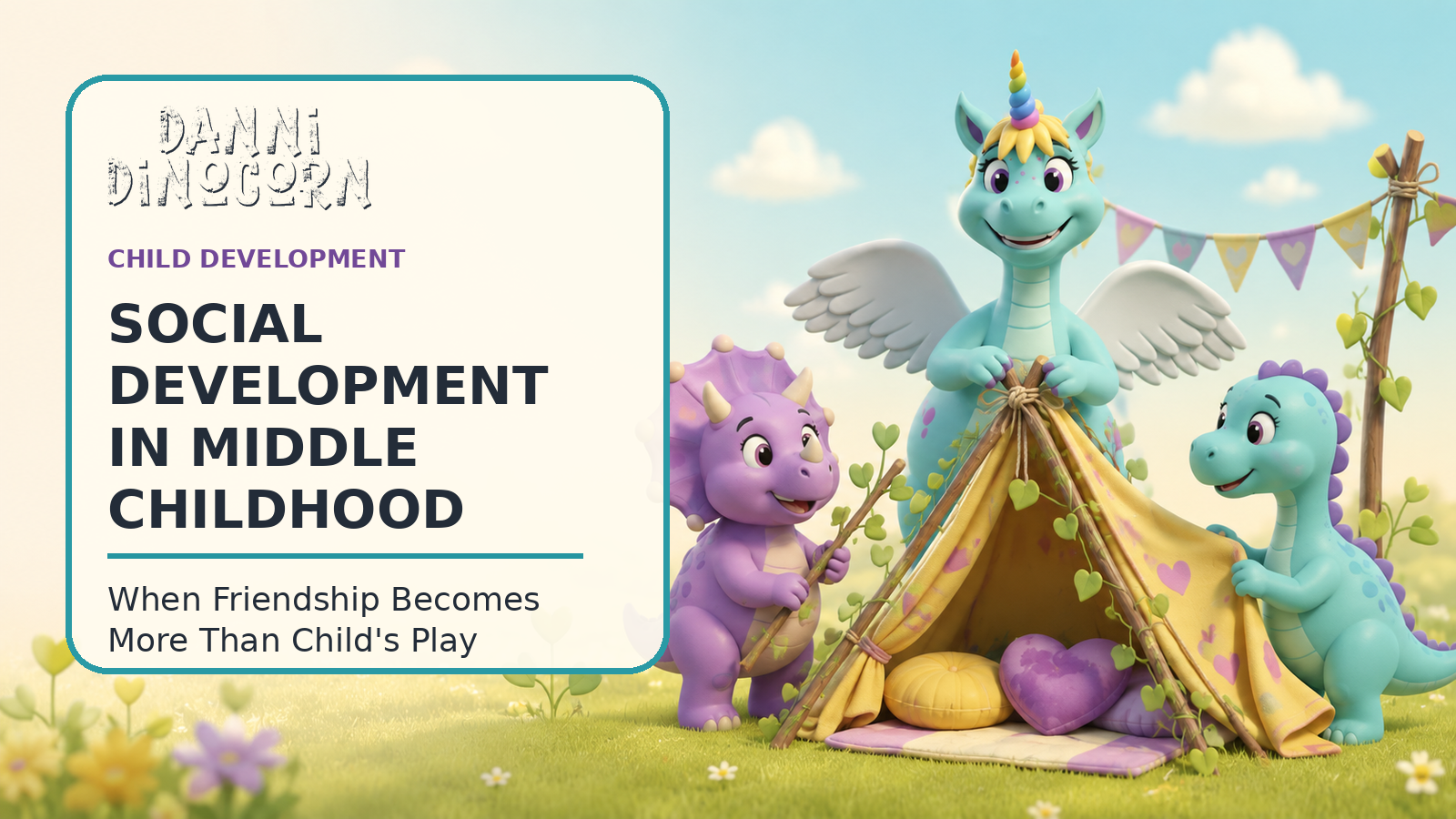
Friendships in middle childhood can be a treasure trove of shared jokes, secret games, imaginative adventures and the feeling that there is someone who “gets” you. Yet navigating the growing complexity of friendships is not always easy.
During middle childhood, children’s social worlds become increasingly complex. They spend more time with peers, develop greater independence and navigate relationships in a range of settings, including school, sport and other activities. Their social development therefore takes place within a much wider social world than it did when they were younger.
At the same time, children are still developing emotionally. They are becoming increasingly able to understand and manage their emotions and navigate relationships with others, but these abilities are still developing during middle childhood. And yet, everyone’s journey is different – children develop at different rates and, in essence, each at their own pace.
So, what can be the tricky parts of friendship during this stage?
Sometimes we want different things
Children are increasingly able to cooperate and negotiate with one another during middle childhood, but learning the balance between “what I want” and “what you want” is still a developmental process. This can be particularly tricky when both children feel strongly about their ideas.
Learning that a friend can have a different opinion, preference or idea – and that the friendship can survive that difference – is an important part of growing socially.
“Can I play too?”
Another challenge is finding a way into an existing friendship or group.
It is much easier to join a game when someone has already invited you than when you have to work out how to approach a group of children who are already playing together. Social situations like these involve several steps: recognising what is happening, thinking of possible responses and deciding how to act. For a child standing at the edge of the playground, it can feel much more complicated.
Watch the face – having to read social cues
Children are also becoming increasingly aware of the feelings, thoughts and intentions of other people. At the same time, accurately interpreting what someone else means is not always easy. At this stage, children are learning that sometimes people say one thing and mean another.
A great deal of social interaction involves working out what other people mean, often with incomplete information. Children can sometimes misunderstand another person’s intentions or interpret an ambiguous situation more negatively than was intended.
Add into the mix having to read social cues – and not only interpret what others say – and the ride gets bumpier.
Learning to take turns
Friendship in middle childhood isn’t only about taking turns with toys. Children also gradually learn to take turns with attention, ideas, decisions and conversation.
This give-and-take is an important part of reciprocal friendship. Friendships during middle childhood increasingly involve qualities such as companionship, caring, support, help and conflict resolution. Positive friendship qualities also tend to increase as children move through the primary-school years.
But reciprocity doesn’t appear overnight. Children are still developing the ability to step outside their own immediate wants and consider the needs and perspectives of someone else.
When big feelings enter the arena
Developing the ability to regulate emotions, tolerate disappointment and pause before reacting is an important part of growing up. These abilities support children’s capacity to manage the ups and downs of peer relationships.
And yet, this skill is still developing during this stage. So, even when children know what they are supposed to do, putting it into practice can be difficult when emotions run high. Sometimes the feeling is simply bigger than their ability to manage it in that moment.
What are we to make of this bumpy ride, then?
Navigating social interaction in middle childhood, as rewarding and fulfilling as it may be, can have its challenging moments. Viewing this from a compassionate and developmental lens helps us understand that children are all still growing and learning, and that each child’s journey is different.
And sometimes, those little friendship bumps are exactly that – little bumps along the road of growing up.
References
- Adrian, M., Lyon, A. R., Oti, R. & Tininenko, J. R. (2010). Developmental foundations and clinical applications of social information processing: A review. Marriage & Family Review, 46(5), 327–345.
- Carr, A. (2017). Social and emotional development in middle childhood. In D. Skuse, H. Bruce & L. Dowdney (Eds.), Child Psychology and Psychiatry: Frameworks for Clinical Training and Practice (pp. 83–90). Wiley.
- McHale, S. M., Dariotis, J. K. & Kauh, T. J. (2003). Social development and social relationships in middle childhood. In I. B. Weiner (Ed.), Handbook of Psychology, Volume 6: Developmental Psychology (pp. 241–265). Wiley.
Disclaimer: This blog is provided for psychoeducational purposes only. It is not intended to diagnose or treat psychological or mental health conditions and should not replace an individual assessment or professional advice from a registered healthcare practitioner.